Final Reflection

Madison Kessler

Intermediate Composition

Professor McLaughlin

April 16, 2020

Final Reflection

            I have always reflected on who I was as a writer. Analyzing the pieces I enjoy writing which then leads me to wonder why I wrote them first place. Personally, I love to write poetry since it’s my own way of expressing my feelings on perspective. For some reason I’ve always been obsessed with getting a different perspective and knowing how other people think and why they think the way they do. With this being said, I’ve always tried to keep an open mind in my poetry; to not manipulate the reader. In my mind, I genuinely didn’t think there was much more to learn about writing.

            My classmates and I were introduced to analyzing articles. I wasn’t sure at first as to why we were supposed to do so, but I didn’t seem to mind since I found almost all of the articles, we ended up reading over the semester, to be quite interesting. The one article that started the semester was “No one could see the colour blue until modern times,” which was written by Kevin Loria. As I’ve already discussed in my last blog post, I loved this article since blue is my favorite color and I couldn’t imagine the world without its existence. One specific quote that caught my eye was “If you see something yet can’t see it, does it exist?” I find this quote to be quite contradicting to some but since I love getting a new perspective, I kept this quote in mind the whole semester.

            Our first project that we were assigned was a profile. We were to write a profile about an individual or an organization. I had a hard time figuring out what I wanted to write about because I always want my papers to be a reflective of who I am and what I like. We did an activity in class over pointing out our values in life. For me, my education is one of the things I value. Since I’m studying business and majoring in Marketing, I realized I wanted to write about a business. After some time, I decided to write about Seth Berkowitz, the creator of Insomnia Cookies. I wasn’t sure if I wanted to write about Seth Berkowitz as a person or discuss the process of how the company came to be. I thought it was a great piece to motivate college students into starting a side hustle. Almost every class, we had some time to discuss any suggestions or questions with our classmates. I really enjoyed doing this activity because I was able to get some input on how others would go about my piece and how they would organize it. I came to the conclusion of introducing Berkowitz and how he started the company into what it is now, along with what they offer. Unfortunately, I didn’t find my piece to be worth publishing so I decided to not do so. I had wanted to reach out to Berkowitz and gather some quotes to put in my piece, but he had never contacted me back. I also wanted to go downtown and take pictures of the Insomnia Cookies located in Clifton, but I don’t live on campus and I didn’t really have the time to do so since we were starting on a whole other project.

One of the most important terms I learned in class was “discourse community.” Before entering this class, I had never heard of the term or what it meant. By basic definition, it’s a group of people who share a common interest. I originally learned this term from another article, “Discourse Community,” which was published by the CCC. Another thing I found interesting, and quite obvious, is that each discourse community shares its own language, as a way to discuss that interest they share. As an example, being a Marketing major means that I am in a discourse community with hundreds of other UC students who share the same interest. Anyone that is outside of this discourse community may not understand the language we use such as “data warehousing” or “data mining.”            

At the end of revising and potentially publishing our pieces, we started our photo caption lists. As a class, we collectively came up with four different interests that we thought were important to discuss. The interests we came up with was entertainment, mental health, financing, and social media. My group, which consisted of Cj, Abby, and myself, wanted to focus on entertainment. We wanted to use the photo caption for ourselves, so we talked about how much of a struggle it can be to find things to do in Cincinnati.
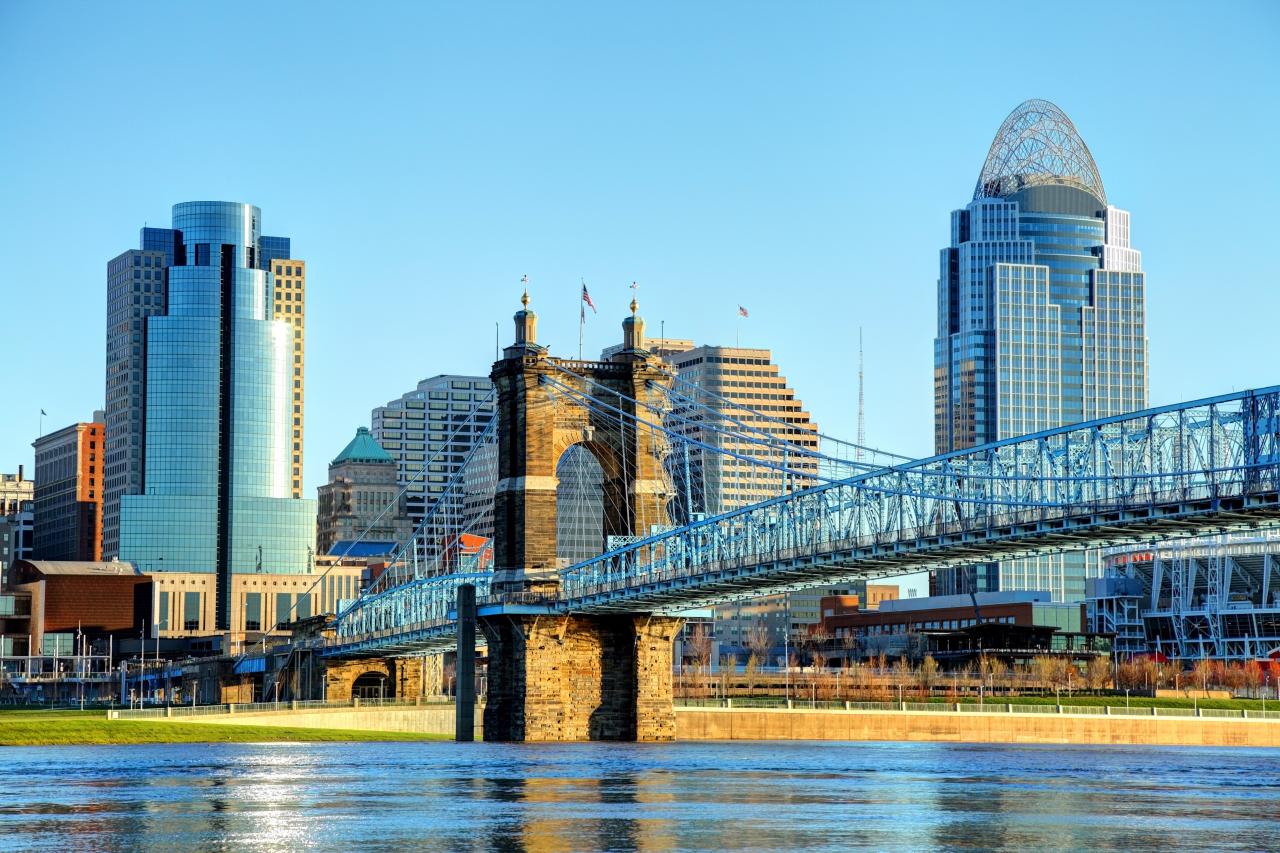
  Specifically, we wanted to talk about affordable places or things to do for college students in Cincinnati, or pretty much anyone that lives or visits Cincy. We could only come up with 9 places and we didn’t really want to add another since 10 is a common number to do for photo caption lists so we wanted our readers to wonder “why nine?” Fortunately, our group was able to publish our revised photo caption list to The Activist. I think we worked with each other really well. To communicate outside of class, we started a group chat over text. If anyone of us had questions or comments, we were pretty quick to respond and give feedback.

            The course transitioned into focusing on well known term, “genre.” My professor had asked the class what genre was defined as, and none of us actually knew. It’s one of those words that you understand the concept of, but you’re not sure how to clearly define it. “Genre Awareness for the Novice Academic Student: An Ongoing Quest” and “Genre in the Wild” were two articles we were assigned to analyze about genre. The first article went more into depth about how to define one genre from the next. There was a list of questions to ask oneself when writing about a genre or reading a genre in Table 2. Some of the questions were, “What are you supposed to DO as a writer when completing this task? Are you asked to make an argument? To inform? To describe or list?” This question caught my eye because, as I’ve discussed previously, I want to have a purpose in my writings for the reader to reflect on. The other article we read clearly defines the term “genre” and what guidelines have been followed for each genre. “Genre is a word we use when we want to classify things, to note similarities and differences between kinds of writing” is the definition of the term. I also acknowledged that there is a fine difference between the guidelines of a horror film versus a comedy. Horror novels contain blood, murder, spirits, and monsters while a comedy will contain jokes, different kinds of humor, and relatable situations that make us laugh. These said guidelines help define the difference of each individual genre.

            At this point, our midterm reflective check-in was due. This paper had to contain pretty much everything we learned and completed from the past 7-8 weeks. We also had to discuss the process of each assignment and who were as writers compared to that time. I found this assignment to be easy since I remembered everything we learned in class and the thought process I had through half of the semester. I organized my paper by time, so I started with who I was as a writer before the course, the first discussion, into the first assignment, etc. I seemed to connect everything I learned into who I was as a writer halfway through the semester. The order that my paper was in was just the way I wanted it to be, since I going to round everything up at the end of my paper, which I did.

            After learning these two terms of “discourse community” and “genre,” I’ve come to notice that these relate to my major. Since I have previously discussed how discourse community relates to my major in Marketing. I want to reflect on how genre can relate to my major. Genre is a word used “when we want to classify things.” My major takes a lot of requirements in order for me to graduate with my bachelors in the year 2022. I have to take two math courses, many business pre-rec classes, and different ranges of marketing classes. These are the guidelines that define my bachelor’s degree in marketing.

            In mid-March, a pandemic that had started in the country of China had finally reached Cincinnati, and we were told that our classes were to be shifted and completed online. We were not allowed to learn face to face or get that personal interaction for our professors or our peers. For me, it was a hard transition, and it still is. I didn’t expect COVID-19 to turn into what it is now, which is very scary to me. I know it has affected so many students lives since I have classmates and friends that have full-time jobs, kids, or other outside activities that they are responsible for taking care of. Unfortunately, I was let go from my job as I was about to become a Sales Manager at the store I have been working at for 2 years. Since this happened, I have no source of income. I also personally struggle with anxiety and OCD and being isolated in a house doesn’t help whatsoever. I have to constantly keep myself distracted, which I can easily do when I go to school, work, or even hang out with my friends. I know many students have it way worse than me, and I really hope that they are doing well and taking care of themselves.

            Ever since this pandemic has reached the United States, I have realized that there are terms that correlate with the crisis that is taking place. “Social distancing” is a huge new term for many. If we have to go out of the house to get groceries, go to an essential workplace, or take care of someone, we must always stay 6 feet apart from everyone. “Six feet apart” and “quarantine” are other terms that everyone has been using in the past month. This is a great example of a discourse community. These terms are only understood by those that are going through this pandemic, which is everyone in the world. We are all one discourse community going through isolation together.

Sadly, the very last assignment that we had to do was to reflect on all of the articles we were given over the course of the semester. This took me some time to get done since there were eight readings I had to go back to and fully remember what each one discussed and what I learned from them. I found the assignment to be easy since I had something to say about each individual article. These articles all had to do with discourse community, genre, and perspective. My favorite articles was, of course, “No one could see the colour blue until modern times” and “Mother Tongue.” I’ve already discussed why I loved the first article, so now I want to provide my feedback to the last article we had to read this semester. This article was about the perspective of language and how different people expect English to sound. The most important and loveliest sentence that I noticed in this article was said by the writer herself, Amy Tan. “I wanted to capture what language ability tests can never reveal: her intent, her passion, her imagery, the rhythms of her speech and the nature of her thoughts.” When writing a paper, there should be no said guideline, it is what you think should be placed in that said piece of writing. That is what my professor has been teaching me this whole semester. She taught me to express myself and to envision my own way of writing, rather than going by a rubric made up from some biased English professor.

      As a writer, I am now more expressive than I have ever been before. This semester has taught me about being open to other perspectives and noticing the difference between them. This is something that I have always strived to learn in life. I’m no longer worried about following what someone else wants in my writings, but what I want in my writings. I take this lesson with me to finish up the last two years of my college career and for the rest of my life. I now acknowledge myself as a true writer.

Works Cited

Returning to our Readings

Madison Kessler

April 10, 2020

  1. “No one could see the colour blue until modern times”

This article addresses that the color blue was seen as a “wine-dark”, not the color blue itself, since it didn’t exist at one point in time. Egyptians were the only ancient culture that had a word for the color blue. The article also states a study done by a researcher named Jules Davidoff who showed a Himba tribe a circle with 11 green squares though one was different, and it was blue. Some members of the tribe noticed the distinction, while others didn’t.

This was one of my favorite articles that we’ve read so far this semester because blue is my favorite color and I couldn’t imagine the world without it. I never knew that the names of colors came into existence over time and not all at once. When I observed the circle of 12 green squares, I couldn’t pick out the one that didn’t fit with the rest, which blew my mind to think my brain couldn’t pick out the lighter green from the rest; and you’d think it would be easy but it’s not. I also never knew that the Egyptians were the first ones to have a name for the color blue and produce a blue dye. I would’ve figured that it had started in Great Britain since the color blue was rare and placed in a few images as a symbol of royalty way back in time. My favorite quote in this article was “If you see something yet can’t see it, does it exist?”

  1. The CCC’s article “Discourse Community”

The CCC’s article addresses and defines the term “discourse community” and provides examples at which this term can be used for.

This article is quite basic in the sense that it’s just a definition of a term. “Discourse community” is defined as “a group of people, members of a community, who share a common interest and who use the same language, or discourse, as they talk and write about that interest.” I never knew a good word to describe a specific group that share similar interests and have their own lingo as a way of communicating amongst themselves. I now fully understand the term and now I see it everywhere I look. For example, at UCBA, there are a group of students that are studying Marketing and share that common interest while also knowing lingo that no other major may not understand such as the word “data warehousing.” I’ve found that there are subgroups within a discourse community. Students that may share the same interest of getting a degree in Marketing aren’t exactly alike, some students in that discourse community may share a liking for video games or sports. Discourse community can also be as broad as dividing two distinct discourse communities such as women and men.

  1. “How Language Shapes Our Perception of Reality”

This article basically talks about how different cultures, countries, and languages communicate and perspective of words and sentences are different in their usage.

I found this article to be very interesting and it made me want to read more and understand how many communicate within their discourse community. This article of language and perspective does tie in perfectly with the previous article about what exactly the term “discourse community” means. Each individual group that share a common interest have their own lingo and way of communicating that another discourse community may not understand. Since I’ve taken 3 years of Spanish in high school and 2 semesters of it in college, I related to a quote in the article which says “Numerous studies have found that learning a new language can change how your brain pulls information together, and because of that, enables you to have more perspectives on a particular issue.”  For example, in Spanish, certain objects have a gender marking in front of the noun. For nouns ending in -a in Spanish, there will most likely be a feminine gender marking of “la” placed in front of the noun. For nouns that don’t end in -a, most of the time there will be a masculine gender marking of “el” placed in front of the noun. Another thing I would like to point out that I found interesting is the way we describe direction. We usually use terms such as “left” and “right”, while in Australia, they will use words such as “north”, “south”, “east”, and “west.”

  1. “Genre Awareness for the Novice Academic Student: An Ongoing Quest”

This article discusses the study of how to properly teach students genre and how to go about it. Table 2 discusses an analysis for genre awareness.

This article took some time to find, but I finally found it. What I found different in this article than others is that it doesn’t simply give a definition to the term “genre” and give examples. In a way, it shows the process of learning and teaching the subject of genre and how to identify different subgroups of genre. In Table 2, I found the questions to be very detailed to get the writer/reader to analyze the genre in a way than just seeking out the guidelines. I like how in-depth the questions are like “What are you supposed to DO as a writer when completing this task? Are you asked to make an argument? To inform? To describe or list?” This question stands out to me the most since I am always questioning myself on what the purpose of the piece is supposed to convey to my readers. The purpose of a piece of writing usually shows the distinction of genre in my opinion.

  1. “Genre in the Wild”

This article is based around the term “genre” and how its used about in different situations and contexts. It also discusses the made-up guidelines for each said genre.

Before reading this article, I never had a said definition made up in my mind for what the word “genre” means. As the article defines it, “Genre is a word we use when we want to classify things, to note the similarities and differences between kinds of writing,” which makes sense to me. I also learned that the term can be broken down into three types: typified, utterance, and recurrent. I’m going to be honest the graphic presented in the article really didn’t help me understand it, but the definitions were just fine for me to understand. With certain situations, we are expected to know the guidelines of a certain genre. For example, if you’re making wedding invitations, you have to always place a greeting, the date of the wedding, the names of the groom and bride, the location, the time, and usually an RSVP phone number or email on the front of the invitation or the back. Those are known guidelines for making a wedding invitation, which are a whole lot different than writing an essay. These guidelines help divide out the difference of genres.

  1. “The Concept of Discourse Community”

This article mainly focuses on what “discourse community” means along with the speech community within a discourse community. It also discusses genre as well and how that sort of ties into discourse community. At the very end of the article, there are six characteristics of discourse community.

Right away, it reminded me of the CCC’s article “Discourse Community.” The article adds more about the connection of genre and discourse community, which we have discussed and analyzed many times in class. We’ve also discussed the six defining characteristics of discourse community and which one we thought was the outlier. I remember the one that stuck out at me was the last one where it says, “A discourse community has a threshold level of members with a suitable degree of relevant content and discoursal expertise.” The reason I say this is because discourse communities have evolved over time and the meaning of certain lingo don’t mean the same thing that they once did. For example, feminists are a discourse community. When feminism was first coined as a subgroup, their main goal was equal pay for women and equal rights for women. Even though these are still relevant goals to feminists today, some people who belong to this discourse community are degrading men and think that men should be below us. So the members who started this movement aren’t the same members who lead this community because of evolution and time.

  1. “Twelve Words”

Brian Trapp wrote an article about the journey of his disabled brother and how he could only say 14 words, but he discussed how it took some time for his twin brother, Danny, to say his name, “I-an.”

In my opinion, I found this article to be very long and repetitive. My focus just got lost in the article. It was in fact a heartwarming story of love and triumph, but it unnecessarily took some time to get there. I’m not entirely sure what this article had to do with what we were learning in class or how it even related to our main topics of discourse community and genre. I assumed that this article had to do with a certain type of genre, which was a testimonial article. It wasn’t my favorite article to read but I did really like the ending where Brian’s dad had said that if Danny were to say, “who’s ugly,” then the nurse would flash Danny in return. Danny finally says “I’an,” which took a humorous turn in the article. The ending was very heartwarming as Brian discusses how he talks about his brother to his daughter as he asks, “Say Danny.”

  1. “Mother Tongue”

This is about the writer, Amy Tan, and her mother and the differences between her mother’s “broken” English, and Amy’s English. She discusses that even though the language sounds different, the same intent is still there.

I love this article, and it’s probably my favorite one I’ve read this semester. It’s amazing how Amy understands her mother’s English clearly, while I couldn’t seem to understand much of it. I think it’s awesome that Amy also majored in English and didn’t go into the expected route which would have been math or English. Amy’s English is phenomenal knowing that in 1985 she didn’t speak the way she does now. I also like how she brought up the fact that English class, especially the ones in high school, are very biased and are only seen a certain way as correct in the teacher’s eyes. My favorite line in this article was, “I wanted to capture what language ability tests can never reveal: her intent, her passion, her imagery, the rhythms of her speech and the nature of her thoughts.”

Friday Post – April 3, 2020

Journalistic Text Reflection

To start off this journalistic text reflection, I want to make it known that I do not want my journalistic text(s) published. When I was first presented this idea of creating a journalistic text over a genre I instantly wanted to stick with horror, even though my group had previously done a presentation over the genre of horror. I started to think about trying a new genre, which is going to be romance. I’m not much of a romance film watcher or book reader, but these types of films or books are pretty stereotypical in my view.

Some strengths I’m finding when writing this piece is romance tends to always be about lovers, which goes along with the guidelines of romance that I will discuss in the next paragraph. It’s pretty easy to lay out how a romance film or book will go just because the same type of story plot seems to happen, but not always exactly. With this being said, there isn’t much diversity in the genre of romance.

In romance films and books, there are always these two characters that meet out of the blue or who have already known each other but cross paths again later on in life. Then they either don’t get along at first or instantly hit it off. These two characters date for a while, and then there is always something, whether that be an ex or a dark secret, that gets in the way of their love. This challenge that is presented is always usually the plot, which challenges the relationship. In the end, they either let go of the one they loved, or they live “happy ever after”. It’s quite cliché, but that’s the best way I can describe the guidelines of romance.

Maybe not in every romance film, everyone finds some sort of love. In reality, it can be a relationship or friendship of any kind. In romance, the two characters seem to have at least one thing in common which gets the conversation starting. This is a perfect example of discourse community since these are a couple of people that share interest with each other. Film waters or book readers who love the genre of romance share a common interest, which is a broader discourse community.

I know this reflection is longer than 3 paragraphs, but I do have one important question about the journalistic text. When exactly is it due, or do we have to simply place it in our final reflection?

Friday Post – March 13th, 2020

Mid-Term Reflective Updated Draft:

Genre Presentation

Note: We wanted to show the evolution of horror films, it’s as simple as that. We expressed some of the characteristics with each transition. Also, we realize that the subgroups show up in film earlier than we presented them to be. We are reflecting when these subgroups appeared more in the film industry, but also when they started as well.

Journal Entry #13

March 4, 2020

1. I am a writer who likes to introduce a new perspective into my writings. I am a writer who also loves to write poetry.

2. I had a story as a writer before this class, and my character focused on not manipulating her reader since that is all she knew from a class prior to this one. She didn’t have much knowledge about other ways of writing.

3. I also had a story in this class, and my character obtained more knowledgeable about different genres and what makes each one different from the other.

4. I have a story now in this class, my character is focused on her group genre piece and is wanting to learn more about different types of genres.

5. The thing that puzzles me most in this class is the type of structure expected before we really even dive deep into the new project. I sometimes feel lost on exactly what we are expected to do before class until the professor has discussed it in class the next day.

Midterm Reflective Check-in

Madison Kessler

Professor McLaughlin

February 25, 2020

Midterm Reflective Check-in

In the past 7 weeks, we’ve done two important papers in class: our profile article and our photo caption list. When we first started our profile articles, we discussed a term called discourse community. At the time, I had no idea what it was called, but it made sense the more I read about it and discussed it in class. Discourse community is a group of people that share a common goal. For example, students that are studying pre-business here at UCBA is a specific discourse community, since all of those students are wanting to get a degree in some field of business. I had no idea what I was going to write about because I wanted to make it interesting for students to actually read the whole article. I always want my pieces to get my readers thinking and put an impact on their perspective. I chose the topic of how Insomnia Cookies started from a dorm room, literally. I wrote about how Seth Berkowitz started the company from nothing and now there’s over 100 locations in the United States. I had tweaked a few sentences, switched some quotes around and I was ready to move onto the next step of my piece.

That day we were introduced to a new “project”, which were the photo caption lists. I knew exactly what we had to do by looking at the example links provided in WordPress. I always look a ton of those weekly, so I wanted to make the one I was involved with interesting. Our group includes Cj, Abby, and I. We focused on affordable place to go/activities to do in Cincinnati since I’m always looking for ways to get out of the house. The process for finding things to do in the city wasn’t that hard and I learned about a few places that I would like to go to myself. We split the list between the three of us, so there were 9 things on our photo caption list in total. Cj, Abby and I all did our parts and got it done on time, although I formatted all of the worked together and would update it when we got feedback. Communication was kept up between the three of us which was good. The 9 places/ activities were placed 1-9 from cheapest to most expensive, which wasn’t too expensive considering it was $36 dollars tops. We did get our piece published to The Activist which felt pretty accomplishing to me.

I worked well with my peers in my group. Cj wrote three good paragraphs about the places he chose to write about and would always give feedback on what we could change or add to our photo caption list. Abby at first didn’t write much about her three places of choice, but she then went back and revised her paragraphs which I appreciated. Although I did format the photo caption list together, Cj and Abby were always willing to help make changes and send me any thoughts they had or ideas for improvement. Communication was kept up well. We had a group chat and whenever anyone of us had a question, the other peers would always answer and give feedback on time which I appreciated as well. All in all, I wouldn’t mind working with Cj and Abby again.

Since I put my effort and time into the photo caption list, I really didn’t have time to update my profile article. I couldn’t get in contact with Seth Berkowitz for a primary quote and I never took the time to add in my pictures in the places I wanted them in my piece. I would’ve liked to take a day in class to get my focus back into my profile article because I thought it was close to publication, but I never got it done.

Seven weeks ago, I had no idea about discourse communities and why the term is important to learn. Recently we were given an article called “The Concept of Discourse Community” and discussed more about the term “discourse community”. I didn’t really learn anything new besides the six defining characteristics of discourse communities, which I found interesting. Our group was to analyze all six of the characteristics and we agreed that the last one wasn’t technically true. The sixth rule wrote, “A discourse community has a threshold level of members with a suitable degree of relevant content and discoursal expertise.” The reason we didn’t agree with this statement is because a discourse community has shifted its goals, meaning, or belief over time. For example, feminism had a different meaning than it does today. Between the years 1848 and the 1970s, feminism stood for equal rights and equal pay. In todays society, feminism is looked at as a way to dominate men and become superior to them; not all feminists believe so, but the term has evolved over time with society. The discourse community of women now is completely different to the discourse community of women back in past years. One of the characteristics that I found interesting was the second characteristic which states, “A discourse community has mechanism of intercommunication among its members.” As an example, someone who was majoring in Pre-Med may not know the terms data mining or data warehousing like how business majors know them. That is because different discourse communities hold different terms that only that community knows to understand and use.

Another term that we’ve discussed in class in genre. We were told to also read an article called “Genre in the Wild”, which was about what genre is and in class we discussed our interpretation of what the term means. I said that a genre is a collection of different formats of writing set into groups depending on the tone and context of the format; sometimes with an indicated use of pictures. Along with discussing our definition of genre, we were told to also think about what a photo caption genre is. To me, a photo caption genre is a list of images corresponding with a sentence or paragraph correlated to the images provided; with numbers favored to be in order. I found that it’s easier to define what a photo caption genre is compared to what a genre is defined as.

For our collaborative presentation, I’m still not sure what we are supposed to be doing since it’s not clearly stated in WordPress or clearly discussed in class. I’m not sure what our group is doing for this presentation and what we are supposed to be writing about.

Friday Post – February 21st, 2020

Top 9 Affordable Places to Visit in Cincinnati

Cincinnati is one of the most popular cities in the state of Ohio, from it’s historical architecture to an overlook of the Ohio River, this city has so many exciting activities and places to visit while you’re here!

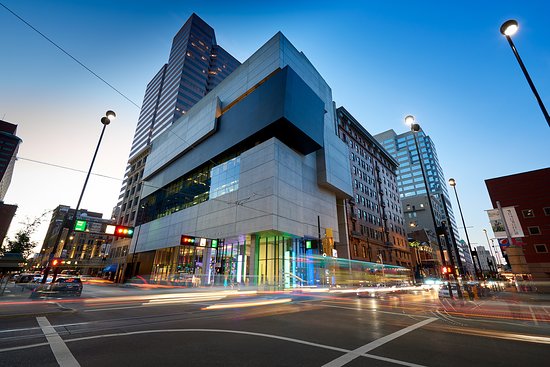
1. Contemporary Arts Center : Downtown Cincinnati ( Free Admission)

The Contemporary Arts Center has many different exhibitions in and out every few months. See modern art as you explore through its spacious rooms and find their interactive pieces throughout. Inside there is a restaurant and bar that focuses on seasonal California cuisine. Take a picture with the mysterious Shark girl, or relax in the Contemplation Room with soothing sounds. 

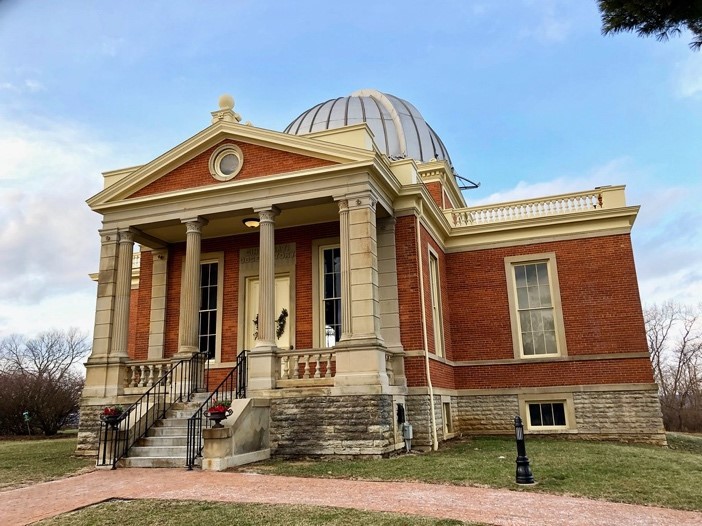
2. Observatory : Hyde Park ( $5 per person)

Starting with one of the best places to go in Cincinnati that is light on the wallet would be Hyde park. Beyond its great atmosphere and amazing shops that fill the area it is also home to Cincinnati’s own observatory. This is amazing event is only 5 dollars a person and a great way to send some time and learn a few things. Cincinnati’s Observatory has the Mitchel scope the oldest still working telescope in the hemisphere. So just remember when you’re have a great time looking through into the starts exploring the unknown that it’s not a bird or a plane it’s probably aliens just flying around in their UFO having a good ole time. Report this adReport this ad

3. Carew Tower : Downtown Cincinnati ( $6 per person)

Ever wanted to see a panoramic view of Cincinnati? We recommend the Carew Tower Observation Deck, located in downtown Cincinnati. On the 49th floor in the highest elevated building in the city, you can see every building and hill in the city, even a view of Northern Kentucky! Carew Tower holds 25 shops, restaurants, and other amenities for your entertainment wants and needs. It’s $6 ages 12 and up, $3 ages 6-11, and free for ages 5 and under. One tip to keep in mind when visiting the tower is to bring cash, specifically small bills, since they don’t take debit/credit cards.

4. The Krohns Conservatory : Eden Park ($7 per person)

The Krohn’s Conservatory Showcases more than 3,500 plant species from around the world including desert plants and carnivorous plants. Some of their year-round plants include bonzai trees and cacti.  Annually, the Krohn’s conservatory hosts a popular butterfly show available at the end of March- June. Stop and smell the flowers here in Cincinnati!  Report this adReport this ad

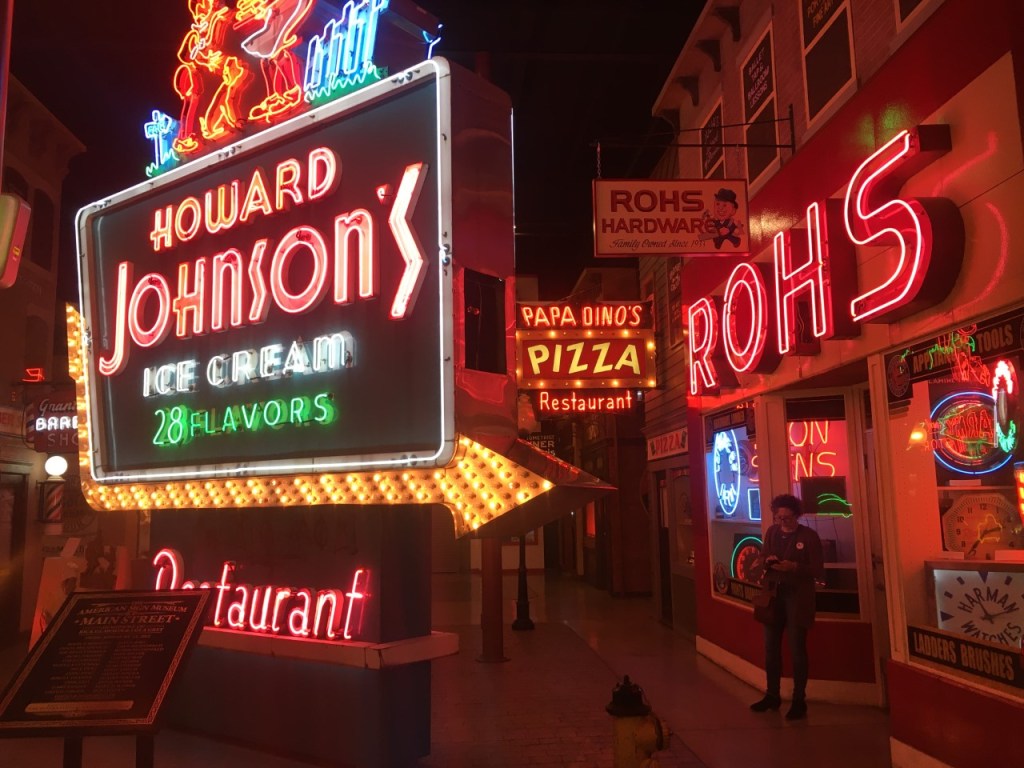
5. American Sign Museum : Cincinnati ($15 per person)

The American Sign Museum is one of the coolest museums we have here in Cincinnati. Home to hundreds of elaborate and beautiful neon signs from across the country, this museum holds unique style that many museums can’t compare to. The American Sign museum was created by Tom Swormstedt, who was the editor and publisher for Sign of the Times magazine before founding the museum. His collection dates to the 1800s up through the 1970’s. The museum is open on Wednesday through Saturday 10:00 am to 4:00pm and Sunday at 12:00pm

6. 3 Quest Challenge : Downtown Cincinnati ($20 per person)

3Quest Challenge is a digital adventure game that takes you around the city to complete 3 quests using an app on your smartphone. You’ll start out at a home base location, then the app will lead you on 3 quests around the city (always within walking distance) Each quest has 3 checkpoints. At each checkpoint, you’ll answer a question to collect a clue, and then perform a challenge. For each question you answer correctly, you score a point. After you’ve completed the quests, you’ll come back to your Home Base to solve your final puzzle using the clues you’ve collected and get even more points by solving the puzzle correctly so try and be accurate and not all whilly nilly. Report this adReport this ad

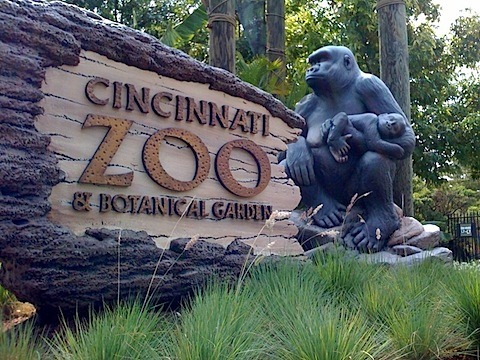
7. The Cincinnati Zoo and Botanical Garden : Cincinnati (about $25 per person)

Home to Fiona the Hippo and hundreds of other animals, our Cincinnati Zoo ranges from large cats all the way to reptiles. The zoo offers more than just animals, take a walk through their botanical garden and other tours. Stop and take a lunch break at Larosa’s Pizza or our famous Skyline Chili. Maybe even grab craft beer on tap at the new beer garden called Hops featuring some local and national drinks. It gets better, visit in the winter time and see the festival of lights. It’s a large light show synced with music and plenty of decorations.  

8. Escape Rooms : Hyde Park (about $72 for two people)

Bringing your assets right back to Hyde park we have Breakout Games, Cincinnati’s #1 escape room. This complex puzzle is fun for everyone. With there being different levels of difficulty and bringing everyone in together for a good challenging time. For anyone that doesn’t know what an escape room is, its locking a group of people in a room with a list of objectives and clues to see if they can get out in 1 hour. This is a great activity to do with your friends or family. The cost is cheaper with a larger group, But it’s worth the whole hour to experience the fun of being locking in a room with all your friends… unless you’re not into those kind of things. Report this ad

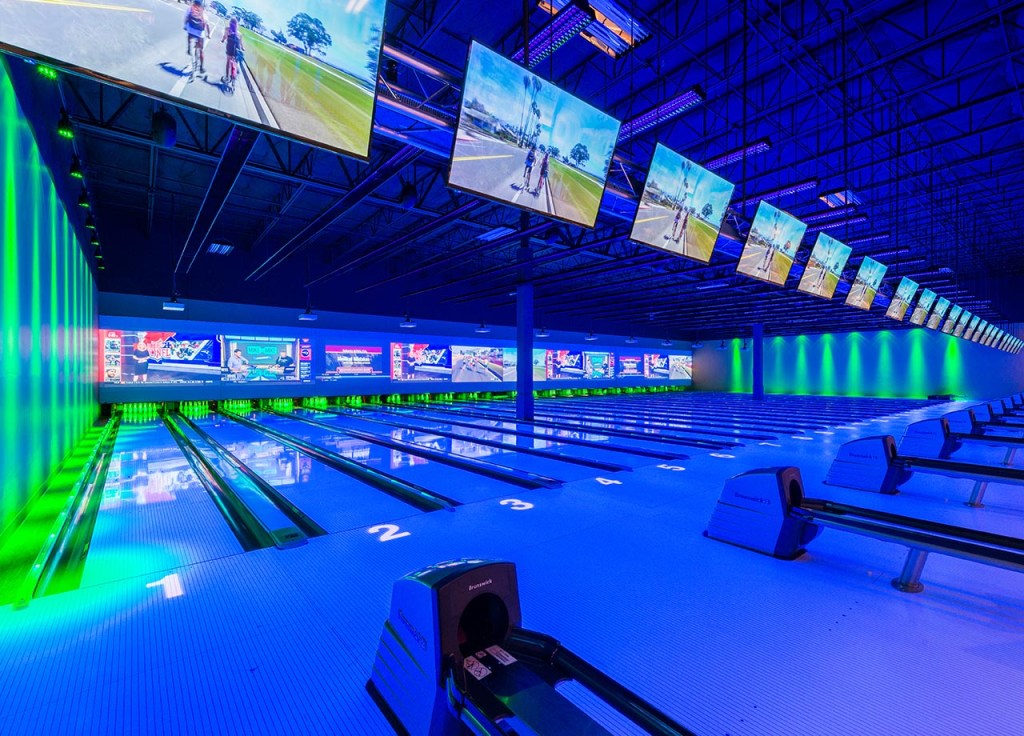
9. Main Event– West Chester ($ varies on number of activities)

Main Event is a family friendly place that has pretty much everything from its own restaurant, bowling, an arcade, mini golfing, to rock climbing! Main Event is located in West Chester Township, about 20 minutes on the outskirts of Cincinnati. Main Event is mainly known for their bowling in the city. What makes its bowling stand out from other bowling allies is its glow in the dark! They have great music and view music videos and sports games on multiple HD screens in front of each ally. Also, while you’re playing, you can order food and drinks and get them waited to you. Prices to bowl each hour vary on the days and time, but on average range from $22/hr to $36/hr. It’s a great place to be with friends and family for some competitive bowling!

1. As promised, we added more detail to the description for the Contemporary Arts Center as well as the Cincinnati Zoo. We also added sub-city locations next to each title of each place/activity, along with a price. We also renamed our headline to just Cincinnati, rather than the Greater Cincinnati Area. The only thing we need to add to our presentation is a catching hook sentence at the top of the photo caption list just to open the presentation up and summarize what will be discussed in the photo caption list.

Questions over Photo Caption List

  1. Genre Name- Photo Caption
  2. Purpose- to inform people about inexpensive things to do in Cincinnati.
  3. Context- We are not writing an timed, in-class response. We have plenty of time to process and revise our photo caption list when necessary.
  4. Writers Role- We are informed students of The Greater Cincinnati area who’ve researched options for other students.
  5. Audience- Greater Cincinnati area-especially students/younger people.
  6. Content- Writing about activities in Cincinnati that are affordable and interesting or fun to do in your free time.
  7. Sources- We could source different web sites for each of the locations.
  8. Other Specifications- The standard writing font is the WordPress standard font. It can be as long as you’d like it. No specific referencing style is needed, as long as it’s presented as a photo caption list.
  9. Assessment- The paper will be graded first by if it’s B-Contract eligible.
  10. Making the text your own- We could have more things to our list but we think the places/activities we’ve chosen are unique to Cincinnati and stand out the most to us by how affordable to options are.

Top 9 Affordable Places to Visit in the Greater Cincinnati Area

1. Contemporary Arts Center

The Contemporary Arts Center has many different exhibitions in and out every few months. See modern art as you explore through its spacious rooms and find their interactive pieces throughout.  

2. Observatory

Starting with one of the best places to go in Cincinnati that is light on the wallet would be Hyde park. Beyond its great atmosphere and amazing shops that fill the area it is also home to Cincinnati’s own observatory. This is amazing event is only 5 dollars a person and a great way to send some time and learn a few things. Cincinnati’s Observatory has the Mitchel scope the oldest still working telescope in the hemisphere. So just remember when you’re have a great time looking through into the starts exploring the unknown that it’s not a bird or a plane it’s probably aliens just flying around in their UFO having a good ole time.

3. Carew Tower

Ever wanted to see a panoramic view of Cincinnati? We recommend the Carew Tower Observation Deck, located in downtown Cincinnati. On the 49th floor in the highest elevated building in the city, you can see every building and hill in the city, even a view of Northern Kentucky! Carew Tower holds 25 shops, restaurants, and other amenities for your entertainment wants and needs. It’s $6 ages 12 and up, $3 ages 6-11, and free for ages 5 and under. One tip to keep in mind when visiting the tower is to bring cash, specifically small bills, since they don’t take debit/credit cards.

4. The Krohns Conservatory

The Krohn’s Conservatory Showcases more than 3,500 plant species from around the world including desert plants and carnivorous plants. Some of their year-round plants include bonzai trees and cacti.  Annually, the Krohn’s conservatory hosts a popular butterfly show available at the end of March- June. Admission is 7 Dollars per person.

5. American Sign Museum

The American Sign Museum is one of the coolest museums we have here in Cincinnati. Home to hundreds of elaborate and beautiful neon signs from across the country, this museum holds unique style that many museums can’t compare to. The American Sign museum was created by Tom Swormstedt, who was the editor and publisher for Sign of the Times magazine before founding the museum. His collection dates to the 1800s up through the 1970’s. The museum is open on Wednesday through Saturday 10:00 am to 4:00pm and Sunday at 12:00pm

6. 3 Quest Challenge

3Quest Challenge is a digital adventure game that takes you around the city to complete 3 quests using an app on your smartphone. You’ll start out at a home base location, then the app will lead you on 3 quests around the city (always within walking distance) Each quest has 3 checkpoints. At each checkpoint, you’ll answer a question to collect a clue, and then perform a challenge. For each question you answer correctly, you score a point. After you’ve completed the quests, you’ll come back to your Home Base to solve your final puzzle using the clues you’ve collected and get even more points by solving the puzzle correctly so try and be accurate and not all whilly nilly.

7. The Cincinnati Zoo

Home to Fiona the Hippo and hundreds of other animals, our Cincinnati Zoo ranges from large cats all the way to reptiles. The zoo offers more than just animals, take a walk through their botanical garden and other tours! 

8. Escape Rooms

Bringing your assets right back to Hyde park we have Breakout Games, Cincinnati’s #1 escape room. This complex puzzle is fun for everyone. With there being different levels of difficulty and bringing everyone in together for a good challenging time. For anyone that doesn’t know what an escape room is, its locking a group of people in a room with a list of objectives and clues to see if they can get out in 1 hour. This is a great activity to do with your friends or family. The cost varies by how many people you have in your group and the escape game challenge you’ll be playing. But it’s worth the whole hour to experience the fun of being locking in a room with all your friends… unless you’re not into those kind of things.

9. Main Event

Main Event is a family friendly place that has pretty much everything from its own restaurant, bowling, an arcade, mini golfing, to rock climbing! Main Event is located in West Chester Township, about 20 minutes on the outskirts of Cincinnati. Main Event is mainly known for their bowling in the city. What makes its bowling stand out from other bowling allies is its glow in the dark! They have great music and view music videos and sports games on multiple HD screens in front of each ally. Also, while you’re playing, you can order food and drinks and get them waited to you. Prices to bowl each hour vary on the days and time, but on average range from $22/hr to $36/hr. It’s a great place to be with friends and family for some competitive bowling!

Photo Caption List Draft

  1. I think we have a really good idea for our caption list since college students are our target market and we know it can be hard to find fun and affordable things to do in the great Cincinnati area. We don’t really have a logical order for our 9 ideas, but after getting feedback in class, I think we might do it in order of affordability or on how close it is to the greater Cincinnati area. My favorite elements of the photo caption list are of course the photos. I think the photos our group provided really bring the list alive and give it some color. I can’t really think of 3 things I could cut expect for adding better spacing and changing the title to focus more on the greater Cincinnati area instead of specifically Cincinnati. I would like to add more content to some of the ideas provided because if I was reading through this photo caption list as a reader, I would want to know more about these place. I also want to add the distance for how far away or how close they are from the greater Cincinnati area. I also would like to format it to look like an actual photo caption list article on a website or online magazine.
  2. I didn’t know that our group for our photo caption list would be involved in deciding on which article we agree should get published. I’m not fully understanding why we’re going off the photo caption list and collaborating our profile projects.
  3. We have gotten our list together and added images for each place or idea to give the photo caption list some life. We plan to go more in depth on each thing on our list just so our reader knows what they’re in for when visiting these places or doing these activities. We also would like to fix the logical order of our photo caption list so that it makes sense to the reader, whether that be by affordability or by location. I have no worked on my profile since I’ve been so focused on our group project and worrying about making sure everyone does their part ahead of time so that our presentation is ready on time for class. The difference between individual work and group work is you get to revise it on your own time and make your own changes. In a group setting, you have to get the approval from your group mates and take into consideration what they have to say about what they want to add or take away from the project, and you also have to check in on your classmates who are deciding to turn in their part of the project late so that everything is put together on time for class in the morning.
Design a site like this with WordPress.com
Get started